Matthew J. Palczynski, Ph.D.
Art History Lecturer

RENAISSANCE MAESTROS
Meet four artists who helped define the Renaissance: Leonardo da Vinci, Michelangelo, Raphael and Titian. In this four-part lecture series, each session is devoted to one master, exploring their lives, landmark works and distinctive approaches to painting, sculpture and design. From Leonardo’s restless curiosity and Michelangelo’s powerful figures to Raphael’s harmonious compositions and Titian’s expressive color, the series reveals how each artist transformed the art of their time and left a lasting mark on what followed.
Road Scholar
October 2027
Detail, Leonardo da Vinci, Mona Lisa, ca. 1503, Louvre

ART HISTORY: A TRANSATLANTIC VOYAGE ON QM2
A travel program on land and at sea. Discover some of the masterworks of art in Paris, at Claude Monet's gardens in Giverny and at the Rouen Museum of Art. Next, dig deeper in a six-part lecture series (“Van Gogh and Gauguin," "Cézanne and Seurat," "Picasso,” "Matisse," "Chagall and Modigliani" and "Crossing the Pond: WW2, Parisian Art and New York”) aboard Cunard's RMS Queen Mary 2 on a special westerly crossing from Le Havre to New York.
Road Scholar
June-July 2027
Detail, Louvre, Paris

LONDON THROUGH ITS MUSEUMS: THE NATIONAL GALLERY
At the National Gallery, a sequence of paintings invites us to look more closely at how images shape perception. Jan van Eyck’s Arnolfini Portrait opens questions about detail and interpretation, while Holbein’s Ambassadors conceals a skull that comes into focus only from an unusual angle. Titian’s Bacchus and Ariadne shows how color and movement animate a myth. We then turn to Seurat’s Bathers at Asnières and Cézanne’s Large Bathers to consider new approaches to color, form and perception. Constable and Turner offer contrasting views of landscape and atmosphere, which we will compare with Monet’s London. Across centuries, these paintings ask viewers to move, reconsider first impressions and notice how artists construct what we see in London and beyond.
Smithsonian Associates, The Smithsonian Institution
June 2027
Detail, Jan van Eyck, The Arnolfini Wedding Portrait, 1434, The National Gallery, London

FOUR ELEMENTS IN ART
Explore art history through the four elements: earth, air, fire and water. In this four-part lecture series, each session to one element, tracing how artists across cultures and centuries have used it to picture the natural world and express ideas about creation, transformation, danger and renewal. From landscapes and seascapes to images of flame and sky, the series reveals how familiar elements can carry strikingly different meanings—and invite us to look at art in new ways.
Road Scholar
May 2027
Detail, Frederic Edwin Church, Niagara, 1857, National Gallery of Art, Washington, D.C.

LONDON THROUGH ITS MUSEUMS: THE VICTORIA AND ALBERT MUSEUM
At the Victoria and Albert Museum, the objects of daily life become a way to explore art, design and cultural exchange. Moving among sculpture, textiles, furniture, fashion and architectural casts, we will consider how materials and techniques shape what people make and use. The museum’s origins in Victorian efforts to improve design open a discussion of industry, education and taste. Its global collections also invite questions about trade, empire and the paths by which objects arrived in London. How does a garment express identity? What can a chair reveal about its maker or owner? By looking closely at objects that unite beauty and function, we will discover how design records changing ideas about work, status and everyday life in London.
Smithsonian Associates, The Smithsonian Institution
May 2027
Detail, Gian Lorenzo Bernini, Neptune and Triton, 1622–23, The Victoria and Albert Museum, London

ICONIC AMERICAN ARCHITECTURE
Explore American architecture in four lectures, each centered on a different kind of space: residences; commercial buildings; places for learning and reflection; and public buildings, monuments and memorials. Examine landmark works ranging from the Chrysler Building to the 9/11 Memorial, showing how to recognize architectural styles and the signatures of influential architects. Along the way, the series considers what buildings reveal about the values of their eras and how architecture shapes the ways we live, work, learn and remember.
Kendal on Hudson, Sleepy Hollow, NY
April 2027
Detail, Frank Lloyd Wright, Fallingwater, 1937

LONDON THROUGH ITS MUSEUMS: TATE BRITAIN AND TATE MODERN
Follow British and international art across Tate Britain and Tate Modern. Turner’s turbulent seas and atmospheric London invite comparisons with Monet’s vision of the Thames and Rothko’s immersive fields of color. At Tate Modern, we will examine Rothko’s Seagram Murals alongside Pollock’s painting process, then turn to Henry Moore’s wartime shelter drawings and Paul Nash’s response to destruction. Barbara Hepworth’s sculpture connects form to the coastal landscape of St Ives, while Warhol and Lichtenstein bring mass media into the gallery. Together, the two Tates reveal how artists have responded to place, war, commerce and the human body. We will ask how the experience of looking changes as images move from representation toward abstraction and new forms in our own time.
Smithsonian Associates, The Smithsonian Institution
April 2027
Detail, JMW Turner, Norham Castle, Sunrise, 1845, Tate Britain
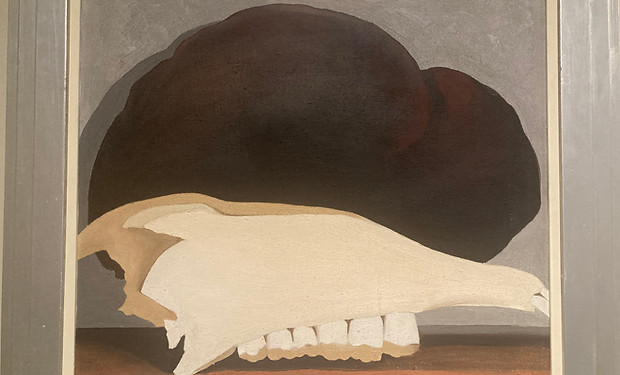
GEORGIA O'KEEFFE: VISIONS OF THE AMERICAN SOUTHWEST
A flower, a bleached bone, a sweep of desert hills: Georgia O’Keeffe found subjects of extraordinary beauty in forms others might overlook. This free lecture exploring the paintings that made her one of America’s most celebrated artists. We’ll look closely at her flowers, landscapes and desert forms as we consider how scale, color and composition transform familiar subjects. Along the way explore what her work reveals about place, perception and the passage of time. Whether you know her paintings well or are encountering them for the first time, discover why O’Keeffe’s vision remains so compelling today.
Road Scholar
March 2027
Detail, Georgia O'Keeffe, Jawbone and Fungus, 1931, Memorial Art Gallery

LONDON THROUGH ITS MUSEUMS: BRITISH MUSEUM
Begin at the British Museum with the Rosetta Stone, an object that helped scholars read ancient Egyptian writing and now raises questions about who should hold the past. We will examine the Parthenon sculptures in relation to their original setting in Athens and consider the arguments surrounding their display in London. Hoa Hakananai’a, a moai from Rapa Nui, extends our discussion to the voices of communities seeking the return of cultural objects. Across these encounters, the museum becomes a place to ask how objects cross borders and acquire new meanings. What can close looking reveal about the people who made them, and how should their histories shape the way museums collect, interpret and share them today in the present day?
Smithsonian Associates, The Smithsonian Institution
March 2027
Detail, Rosetta Stone, 196 BCE, British Museum

ERAS OF AMERICAN ART: GILDED AGE TO POSTMODERNISM
Explore the transformation of American art and culture from the Gilded Age through the 1970s in this eight-part series. From opulent mansions and society portraits to Abstract Expressionism, Pop Art and the emergence of Postmodernism, discover how artists and architects responded to a nation undergoing extraordinary change. Each lecture connects visual innovation with the forces shaping everyday life, including industrialization, war, economic upheaval, civil rights, consumer culture and technological advances. Alongside painting and architecture, consider film, music, literature and design as expressions of their eras. Encounter familiar masterpieces and unexpected connections while learning how American creativity both reflected and challenged prevailing values, reshaping ideas about identity, progress and the role of art in American society.
Roundtable by The 92nd Street Y
February-April, 2027
Detail, The Wizard of Oz, 1939

ART HISTORY WORLD ACADEMY
Experience art history as a journey across land and sea in this eleven-part lecture series aboard Cunard’s Queen Victoria. Traveling from New York to Los Angeles, with stops in Aruba, the Panama Canal, El Salvador and Mexico, the program explores masterworks from across cultures and centuries. A lecture on Diego Rivera and Frida Kahlo brings their art into focus as the voyage approaches Mexico. Each session connects close looking with the places, people and ideas behind the art, inviting travelers to discover new ways of seeing as the journey unfolds.
Road Scholar
January-February 2027
Detail, Chichen Itza, 1050-1300 CE, Yucatán Peninsula, Mexico
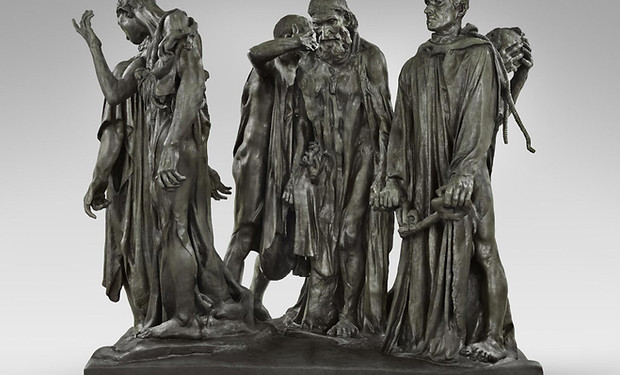
BREAKING THE MOLD: AUGUSTE RODIN
Auguste Rodin was a Janus-like figure, at once looked backward and forward in time. His work links disparate figures like Michelangelo and Brâncuși, bridging the gap between academic and avant-garde. As he famously quipped: “I invent nothing, I rediscover.” Unpack what makes The Gates of Hell, on which he worked for thirty-seven years for a museum that was never built, so legendary. Discover what he gleaned from Impressionism; and how his work contributed to the modernist sculptural developments in the School of Paris during the first decade of the 20th century. Even without typically using a chisel, explore how Rodin became one of the most celebrated sculptors in the canon.
Smithsonian Associates, The Smithsonian Institution
January 2027
Detail, Auguste Rodin, The Burghers of Calais, 1884-95, The Metropolitan Museum of Art